
2026-10-01
Peshtemal vs terry in the sauna: what actually works
The sauna towel has two jobs: something to sit on and something to dry with between rounds. The material decides how heavy it gets wet, how fast it dries and whether it fits in your bag.
What the towel actually has to do
On the bench it protects the wood and you from other people's sweat in a public sauna. After the session it should take water from skin and hair without becoming a wet brick in the bag.
Many people bring two: a thin one to sit on and a thicker one to dry with. That works - but it is more to carry and more to dry at home.
A good compromise is a towel large enough to sit on, thin enough to dry fast and strong enough for repeated sauna use.
Peshtemal: the thin woven option
Peshtemal (sometimes pestemal) is a traditionally woven cotton or linen towel from Turkey and the Mediterranean. It is flat-woven, not looped like terry, and stays lighter when wet.
It dries fast on a hook, packs small and feels cooler on the skin after sauna. Absorption per gram is often surprisingly good for how thin it looks.
Downside: it feels less 'luxurious' the first time if you are used to hotel terry. It also covers less bulk if you wrap the waist - pick enough width.
Terry: the classic thick pile
Terry soaks a lot of water quickly thanks to the loops. After a long shower it feels comfortable. In the sauna those same loops become a sponge: heavy, slow to dry and quicker to smell if left wet in a bag.
Thick terry takes space. On a tight sauna bench it can also bunch awkwardly under you.
For spa days at home with a washer next door, terry is fine. For a gym bag and three rounds a week it is often overkill.
Comparison in plain language
- Pack size: peshtemal wins. Terry takes more space.
- Dry time on a hook: peshtemal dries faster.
- First soak after a shower: terry often feels drier sooner.
- Wet weight: terry gets heavier.
- Bench hygiene in a public sauna: both work if the surface is covered - peshtemal is easier to lay flat.
- Smell after a forgotten bag: terry punishes you harder.
Hygiene and facility rules
Many facilities require a sit cloth. A clean towel is enough. Wash regularly - a 'sauna towel' that never gets washed is not edible.
Wash at the temperature on the label. Skip fabric softener that kills absorption. Dry fully before the next session.
When to choose which
Choose peshtemal if you bathe often, travel light or share a gym locker. Choose terry if you mostly shower at home after sauna and like thick fabric.
Already own big terry: use it at home and get a thin woven towel for the facility. You do not need to throw anything away.
The Wrap in this category
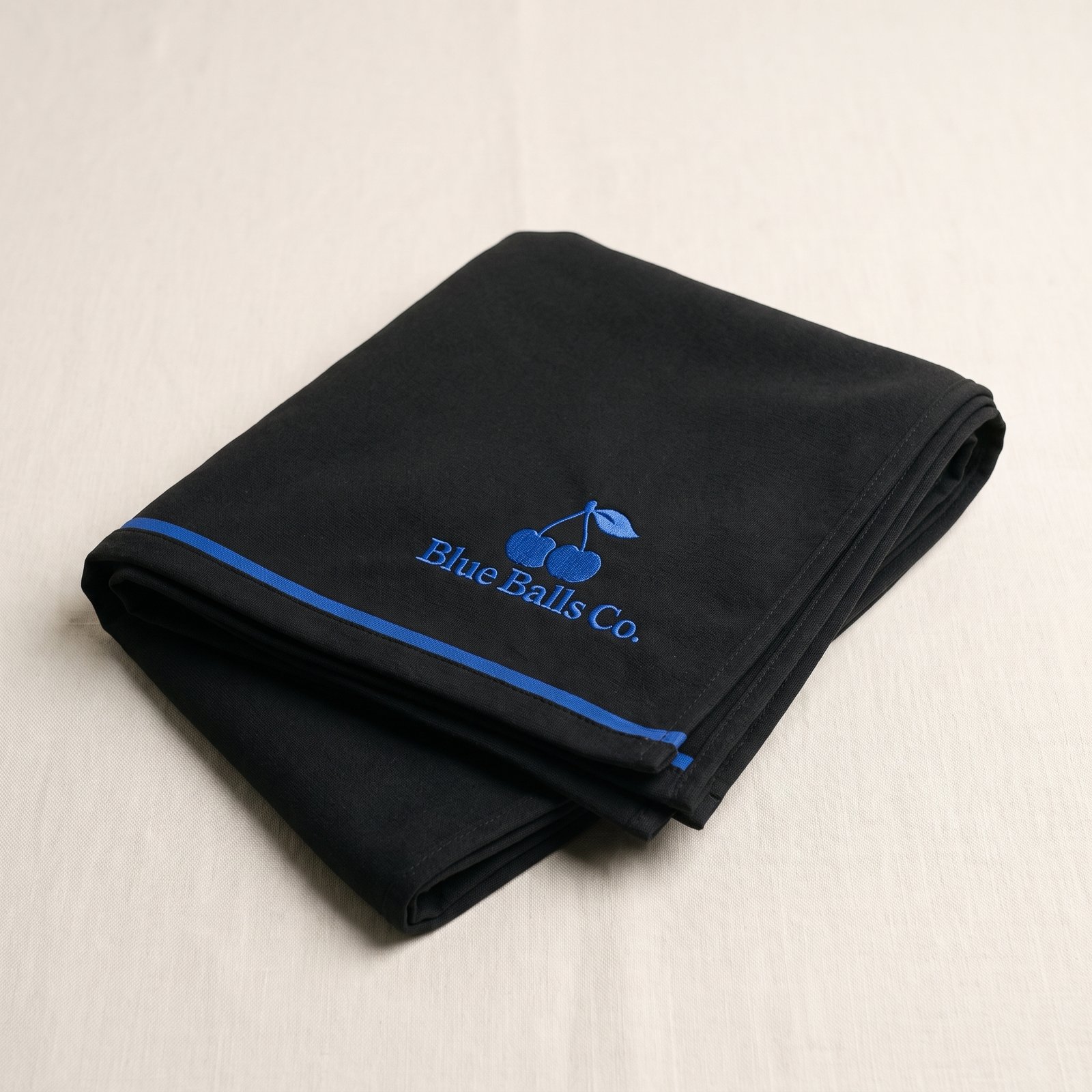
The Wrap is Blue Balls Co.'s peshtemal-style sauna towel - meant to sit on and dry with without filling the whole locker.
It is listed as coming soon. While you wait: a simple woven cotton peshtemal from a normal towel shelf does the same job in principle.
From hammam to Nordic sauna: weave, fibre and feel
The peshtemal belongs to a long bathing culture around the hammam, where a light woven cloth could be worn, sat on and used for drying without becoming bulky. Nordic sauna has a different history, but the jobs overlap: cover the bench, manage moisture and move easily between heat and washing. Borrowing the format is practical rather than decorative.
Cotton and linen behave differently even when both are flat-woven. Cotton often feels softer at first and becomes supple after washing. Linen can feel drier and firmer, yet releases moisture quickly and often improves with use. Blends offer a compromise. Read fibre content and care instructions rather than assuming every thin towel behaves alike.
Terry loops create a large surface and absorb water quickly. That feels good after a shower, but the same structure holds more moisture, detergent residue and lint. A dense hotel towel can feel luxurious for five minutes and then weigh heavily in the bag. At home this matters little; for regular gym travel it becomes obvious.
Feel is personal. A new peshtemal may need washing before first use to absorb well. Old terry may turn rough from excess detergent or hard water. Judge more than the category: weave, laundering and drying all matter. A simple cloth cared for well often beats an expensive towel left damp.
How to sit, wash and pack the towel
Fold the peshtemal so all skin has fabric between it and the bench. On narrow benches a lengthwise fold often works; on deeper seating, double it beneath the seat and thighs. Keep the same side towards the body between rounds. In public sauna, always follow local hygiene rules even if your personal method seems clean.
Wash according to the label and facility requirements. High heat suits some cotton cloths but shrinks or wears other weaves. Fabric softener leaves a coating that reduces absorption, so skip it. Use detergent sparingly and dry fully. Persistent smell calls for a better routine rather than perfume.
After a session the cloth can be rolled loosely until home, but take it out of the bag immediately. Separate wet and dry items in a packing cube and open any waterproof compartment as soon as possible. On a trip, two thin cloths may be more flexible than one thick towel: one for the bench and one for the shower, both drying faster between days.
Choose size by task. A seat cloth must stop skin meeting wood. A waist wrap needs enough length and width after laundering. Fringes are traditional but should not catch in doors or bench gaps. Check edges while folding; a small tear is easier to mend before it travels across the weave.
One simple decision before the next session
Take the towel you already own and note three things afterwards: did it cover the bench, dry your body and become dry by the next morning? If yes, there is no need to replace it. If pack volume or slow drying disrupts the routine, a flat-woven peshtemal is a practical alternative, not a requirement.
Sources
Read next
Blue Balls Co. sells textile and comfort products. Our products are not medical devices and are not intended to diagnose, treat, cure or prevent any disease or condition. We make no claims about effects on fertility. Consult a doctor with questions about reproductive health.
Back to the blog