
2026-09-30
Are sauna cooling briefs the same as "ball cooling underwear"?
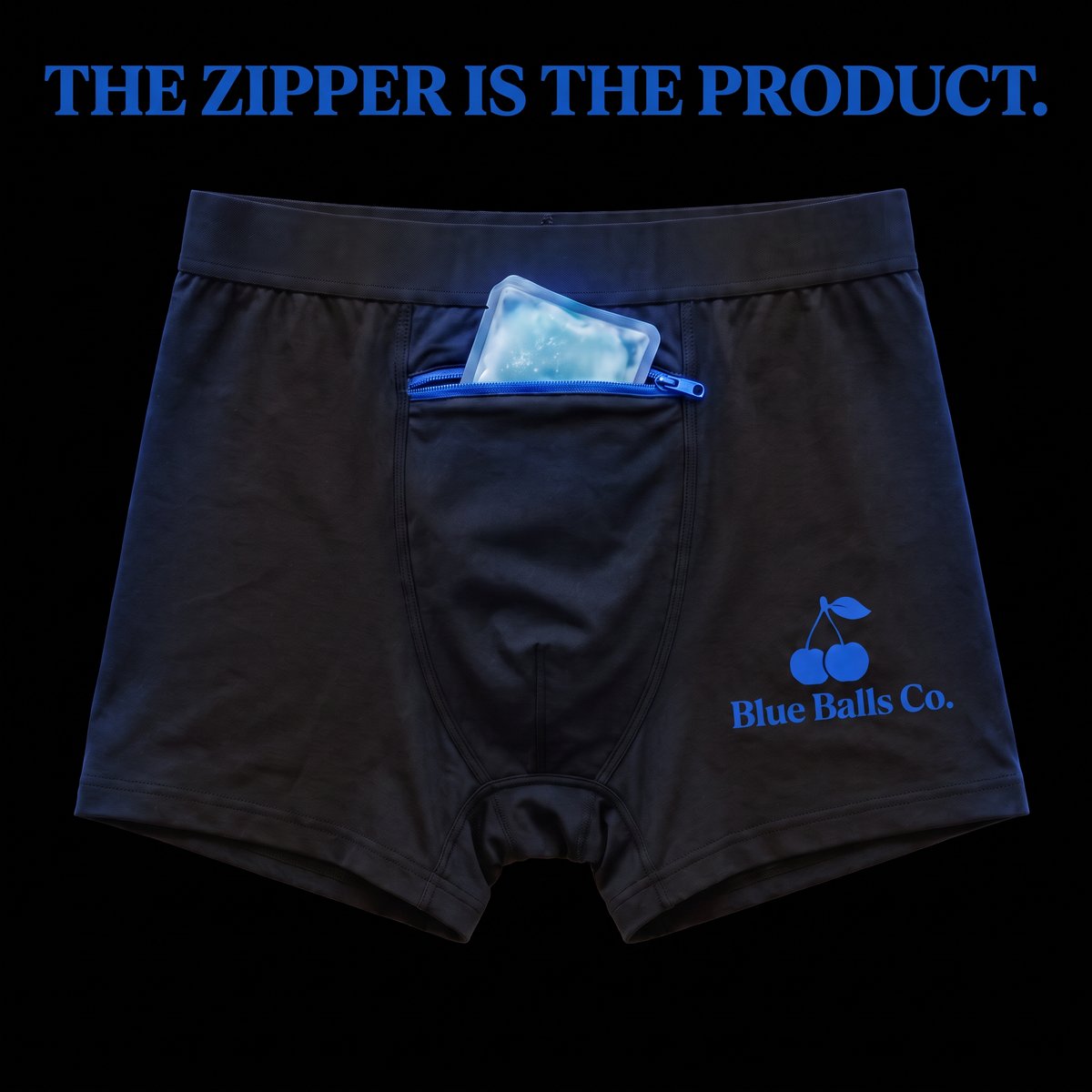
Sauna cooling briefs are underwear with room for a cold pack, made to feel better after the heat. "Ball cooling underwear" is a broader English label often sold with health promises. The categories overlap in form but differ in what they claim.
Two categories that look alike
Both are usually briefs or boxers with a front pocket for a freezable gel pack. Both are sold to men who use the sauna, train or spend time in heat. The difference shows on the packaging and in the ads.
One category says roughly: this feels good after the sauna. The other says: this does something to your body. The first is a comfort claim anyone can test for themselves. The second is a health claim that needs evidence.
A simple classification
- Comfort garments: sold for comfort and cooling down. Make no health claims. Examples: sauna briefs with a cold pocket, ventilated sports underwear.
- Lifestyle garments with health hints: use words like "optimise", "performance" or "natural levels" without saying exactly what. The most common and vaguest group.
- Garments with explicit health claims: claim an effect on hormones or fertility. Such claims need evidence, and in the EU a product claiming a medical effect may need to be regulated as a medical device.
- Medical devices: products actually certified for a medical purpose and used under medical supervision. Rare and seldom sold directly to consumers.
How to spot a health claim
- Look for verbs like "raises", "boosts", "improves" or "protects" followed by something in the body.
- Check whether there are sources, and whether they are about the product or only about the principle that heat affects the body.
- Watch for before/after numbers without a study reference.
- Ask whether the product is CE-marked as a medical device. If not, it may not be marketed with a medical effect.
- Be sceptical of influencers using their own lab results as proof. A single sample says almost nothing.
What research supports and what it does not
Research shows that local heat can temporarily affect sperm production, and that tight clothing has a weak association with lower values. That is documented in observational studies and one small sauna study.
There are, however, no controlled studies showing that a cooling garment improves fertility or hormone levels in healthy men. Anyone claiming so goes further than the research.
Our summary of the research is on the Science page, with evidence grades for every claim.
Where we stand
We sell sauna gear. Our cooling briefs belong to the first category: a comfort garment for cooling down after the sauna. We make no health claims about them.
The research we summarise lives on separate pages, apart from the products. That is deliberate. We think frequent sauna users deserve an honest summary, but it should not be used as a sales pitch.
If you are buying something in this category
- Fit: comfortable without squeezing. The pocket should hold the pack still.
- Material: breathes and dries quickly. Survives washing.
- Cold pack: against fabric, never directly on skin. Follow the maker's time limit, usually 15–20 minutes.
- Return rules: underwear often has hygiene rules. Check before breaking the seal.
- Claims: choose a maker who says what the product does, not what it does to you.
Glossary
- Kylkalsonger: the everyday Swedish term for underwear with a cold pocket.
- Ball cooling underwear: English umbrella term, often health-focused.
- Scrotal cooling: the medical term used in research.
- Gel pack / cold pack: a freezable pack with gel that holds cold longer than ice.
How the category grew
The idea of cooling down after the sauna is old. In Finland and Sweden people have always gone out into the snow, dipped in the lake or sat on the porch with a cold towel. What is new is that someone has sewn a pocket for the cold into a garment you can wear.
The first garments in the category came from small makers in the US and the UK, often sold with health messages. That gave the category both attention and a reputation for promising too much. Newer brands have become more careful and talk more about comfort and ritual.
In the Nordics, sauna culture has made it natural to think of the cold as part of the session rather than as a treatment. That is where we come from ourselves.
How the garments are used in practice
Most people use the garment after a sauna round, during the rest before the next. The cold pack comes out of the freezer, goes into the pocket and is worn for 15–20 minutes. Then the pack comes out and goes back in the freezer. The garment can be worn on as normal underwear.
Some use it after training or on a hot day, others only when they feel overheated. Habits vary a lot, and there is no right way. What matters is that the cold never sits directly against the skin and that you take breaks.
A common mistake is using the pack for too long or too cold. It should feel cool, not painful. If the skin turns white, goes numb or hurts, that is a sign it is enough.
How to read the marketing
- Look for what the product does physically: cools, stays in place, dries fast. That can be checked.
- Be sceptical of promises about hormones, energy or performance. They are rarely based on studies of the product.
- Check whether cited studies are actually about the product or about something else, such as sauna in general.
- See whether the maker states limitations. Serious players say what they do not know.
- Look at return terms and washing advice. They say a lot about how the garment is meant to be used.
Alternatives without a special garment
You do not need a special garment to cool down. A cold shower, a dip, a cold towel or just sitting outside for a while gives the same basic coolness. The garment is a convenience for anyone who wants to move freely while it cools.
What matters most is still the habits around the sauna: a sensible temperature, water before and after, rest between rounds. That is where the big difference in how the session feels lies.
Material and fit in detail
A garment worn after the sauna has to cope with moisture. Cotton is comfortable but dries slowly and turns cold when wet. Blends with modal, lyocell or a small share of elastane breathe better and keep their shape after many washes.
The pocket is what separates the garments most. It should sit where the cold is needed, be large enough for the pack and close properly so nothing slips out when you move. A zip or a tight fold works better than an open compartment.
The fit should be close to the body without squeezing. Too loose and the pack moves, too tight and sitting becomes uncomfortable. Between two sizes, the smaller one usually works better, as long as the waistband does not dig in.
Questions we often get about the category
- Can you wear the garment in the sauna? No, the cold pack should not be heated. Use it after the round.
- How long does the cold last? Usually 15–20 minutes, depending on pack size and room temperature.
- Can you sleep in it? Not with the pack in. Without the pack it works as normal underwear.
- How do you wash it? Take the pack out first, wash the garment according to the label and wipe the pack by hand.
- Do you need a special garment? No. It is a convenience, not a requirement for the sauna.
Caring for the cold pack
A gel cold pack lasts for years if cared for properly. Store it flat in the freezer so it freezes evenly and fits the pocket. A pack frozen bent is hard to fit and can crack at the folds.
Wipe the pack with a damp cloth after use and let it dry before it goes back in the freezer. Do not use a dishwasher or washing machine. If the pack starts to leak, stop using it and replace it.
Keep two packs in rotation if you use the sauna often. One is always frozen when you need it. A pack usually needs two to four hours in the freezer to get fully cold again.
Never let children or pets play with the pack. The gel is not meant to be eaten, and a frozen pack can cause cold injury if held against the skin for too long.
What this article is not
- It is not a product test or brand comparison.
- It is not legal advice on marketing rules.
- It does not claim that any product in the category has health effects.
Sources
- Garment fit, scrotal thermoregulation, and male fertility outcomes (2026). Narrative review, Translational Andrology and Urology.
- Mínguez-Alarcón L. et al. (2018). Type of underwear worn and markers of testicular function. Human Reproduction (ESHRE press summary).
- Garolla A. et al. (2013). Seminal and molecular evidence that sauna exposure affects human spermatogenesis. Human Reproduction.
Read next
Blue Balls Co. sells textile and comfort products. Our products are not medical devices and are not intended to diagnose, treat, cure or prevent any disease or condition. We make no claims about effects on fertility. Consult a doctor with questions about reproductive health.
Back to the blog